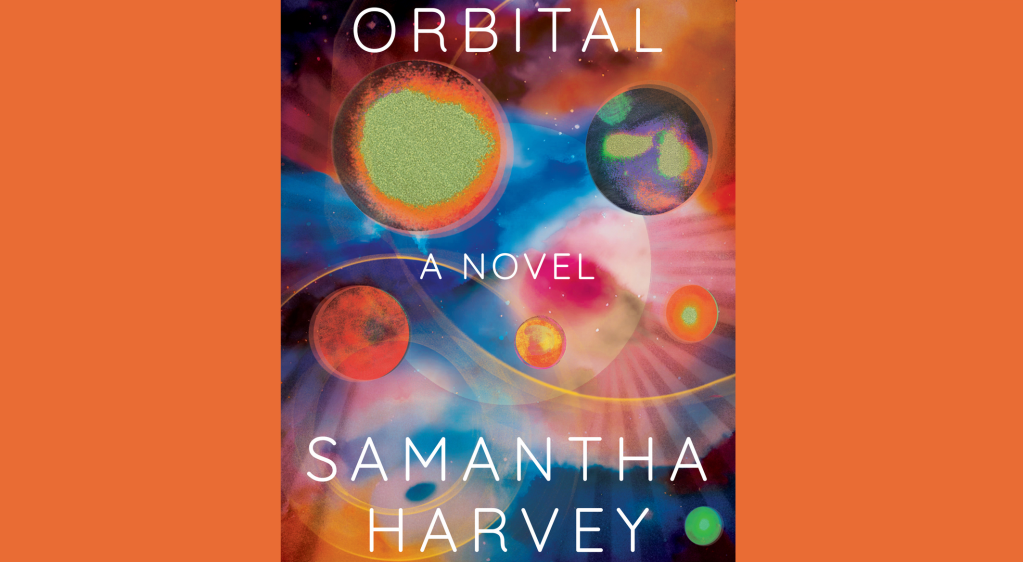
Not long ago I lived in an apartment building with expansive views of the Hollywood Hills and the San Gabriel mountains beyond, marking my first exposure, on a consistent basis, to such a splendid and vast landscape. Day-after-day, marveling at this distant setting, I yearned to zoom over as if on a zip line so that I could immerse myself in its beauty. I reached the mountains, snaking my way through the city via car (no magic zip line or transporter available); however, once perched in these ranges, high above the city, I now looked down to the valleys below in awe, ignoring the proximate heights in which I was previously so engrossed. What makes a far-off mountain or distant valley striking, evoking a visceral response, while an arguably equally incredible nearby tree is barely noticed, if at all. It’s possible that our crowded minds dismiss the ubiquitous tree, while the novel mountain range is more deserving of our attention (though I never tired of that great view – novelty or not). While I occasionally reflect on this duality, only in reading Samantha Harvey’s novel Orbital (Grove Press) where she takes the exploration of this phenomenon to the extreme, does an explanation crystalize and subsequent realizations emerge.
Harvey’s work meditates on six astronauts’ visually and emotionally overwhelming experience of observing the Earth from 250 miles up in the International Space Station (ISS) as their constant free fall takes them around the globe at 17,500 mph completing sixteen orbits in a single day. Her hypnotic verse packed in prose places the reader in an almost trance like state, perfectly mirroring the astronauts’ captivation with sunrise and sunset, sixteen times a day, day-after-day. The experience alters their perception of Earth – regressed from life’s distractions – to a previously dormant purity. After a momentary focus on the illuminated metropolises of the night sky – direct evidence of humanity’s presence serving as salve to the station’s isolated perch – their nerves settle and senses broaden. Focus then shifts to basking in the natural beauty of the daytime Earth, where constant charting from above morphs their understanding of the planet into a single entity with no separations marked by country or culture, where land and sea are one.
They are enveloped in a cascading beauty that has no end; one they can only absorb with the freedom of distance. Where once mortgages, Invisalign, and constant calculation blurred their vision, the now palpable fragility and smallness of their existence reshuffled a halo of concern to mere survival, thereby facilitating clean and objective views of the distant planet below. The separation allows nature to shine through the ego ridden human psyche. With this new knowledge, this new love, they yearn to protect the planet from harm – from waste and destruction, from war and man-made delineations and petty squabbling. The astronauts’ perspective and ego appear inextricably intertwined and they now see the whole of the world and humanity in this distinct and distant frame.
Several personal vignettes intersperse Orbital to service Harvey’s depiction of the voyagers’ perspectives. In one especially illustrative narrative, we learn that one astronaut carried a postcard of Diego Velázquez’s Las Meninas with them aboard the ISS, which famously depicts a flourish of perspective possibilities. Is the subject Velázquez at the easel, the King and Queen seen through the mirror, the ladies in waiting, or is it we, the viewer? Contemplating this painting projects not options of subject, rather competition. Everyone in view competes for attention, all saying “look at me”, save one. And it is in this exception, exemplified by one of the crew member’s opinion that the dog is in fact the subject that we see the secret power of the astronauts. In reaction to the possibility of the dog as subject, one astronaut thinks, “An animal surrounded by the strangeness of humans, all their…posturing…all the ways they’ve tried not to be animals…and how the dog is the only thing…that isn’t slightly laughable or trapped in a matrix of vanities”. They see the dog as free in the same way they see themselves freed, for they have ironically achieved both the pinnacle of human advancement while simultaneously shedding their human need of self-importance.
As so often is the case with humanity, an intention or direction has a resulting consequence unfathomable to its creator. Earthbound humans sought a crew living, experimenting, and testing the limits of humanity’s progress; however, autonomic hubris blinded even contemplation of the mindset that frames the crew’s actual experience. The perspective bending shock therapy that rewired the astronauts’ brains yielded a newfound understanding and clarity. Most prescient, progress occupies their minds and, apropos, one of the travelers reflects on a question from his daughter months earlier, saying “do you think progress is beautiful?”. He, without thinking, said yes; however, now observing the pillaged planet below he wishes he took even a moment to consider it. He would have said – what he promised himself he will tell his daughter upon his return – that progress is a rationalization, a representation, not an object to target. A person is the thing and the idea behind it is riddled in self-aggrandizing, which at its best may have unforeseen consequences and at worst used as smoke screen for countless conquests. The astronauts inhabit a unique interim plane of humanity as conflict-of-interest free observers set in stasis on a line between time – the earthbound inhabitants below on one side and the future explorers of the cosmos, the other. While consuming the rotating world below, their minds wander with contemplation of humanity’s future. As they peer closer, beyond the high-level purity they initially sketched in their minds, a more ominous reality sets in – that the planet they so wish to protect already screams with deforestation, fires, floods and pollution. Realizing the heavy truth that not only the promise of progress, but mere survival may move humanity, outward, away from earth. Perhaps the planet will be better off when humans can safely extend beyond its gravitational hold, but at what expense to these systems that sparkle in the frontier above. Assessing the nature of humanity and its impact may be more immense a task than the universe itself; however, a more straightforward truth is that we all may do for thinking a little more like these circling observers, pausing our minds to take on the freedom of the Las Meninas dog. And with that balance perhaps we won’t have to gaze at a distant mountain range to see beauty, when a whole universe exists within our outstretched arms.


 Sanford Moxley
Leave a comment