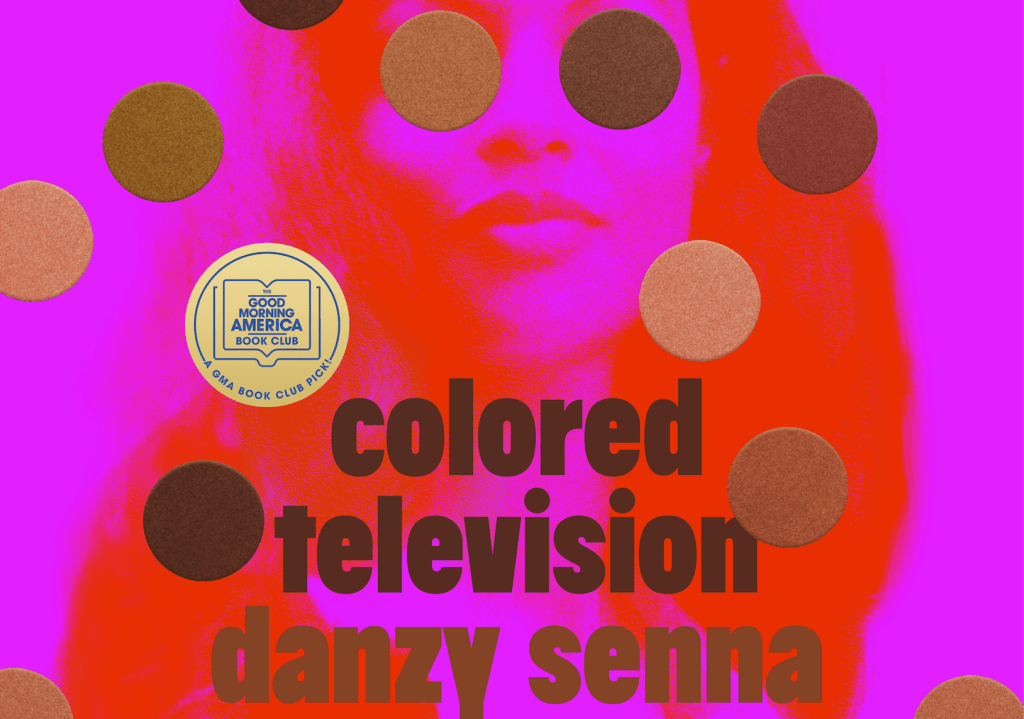
As with much of America, Los Angeles exists on many levels, casts unique opportunity and exudes beauty. But also quite American, it reduces to the tragic, the animalistic “kill or be killed” and brims with contradiction. The Los Angeles and Hollywood in Danzy Senna’s newest novel Colored Television (Riverhead) is all of these as she deftly depicts a world that draws people in, moth to the flame, and spits them out just as fast.
We follow Senna’s protagonist, Jane Gibson, as she runs roughshod on the world of show business where her outsider’s experience serves as metaphor to her otherness in American society. Jane’s struggle to find herself and the satisfying side of the American Dream parallels her life as she navigates the world a child of a black father and white mother. It is also her source of creative inspiration.
At its core, Colored Television explores the consequences of dishonesty and how shame can mercilessly shift one’s decisions to the side of deceit. Jane acts and moves through this story clouded with the expectation of and need for success, the measurement of which is derived by by a tableau of advertorial content hanging in her psyche. Here anxiety metastasizes and she steers her way through each moment to minimize the potential embarrassment of failing this litmus for American success.
Jane, a struggling novelist whose latest book is rejected and faces quickly vanishing options, pawns off her best friend’s premise for a television show as her own. A proud resident of the literary world, this move to the lower echelon (in her mind) of entertainment development is a last resort. In a reckless “fake it ‘til you make it” tornado of ever escalating and convoluted lies to everyone (including her husband), her dreams of success (that being living in the “right neighborhood” with the “right people” and the “right schools”) evaporate when confronted with the immediate and unavoidable necessities for her family. Ironies pile high as a powerful two-faced entertainment producer takes advantage of Jane’s naïveté, stealing her unpublished novel and using it as the basis for a soon to be award winning show. Senna’s creation paints Hollywood as ugly, shallow, and ruthless. Whether real or imagined, that discovery is for those willing and able to risk a dip in Tinseltown’s magic machinery.
In a classic case of the haves and have nots, Jane is the poster child for the multitudes of those unable to break through to success in Hollywood. Catharsis results only as she relents in her pursuits. There is a sadness in Jane’s move to authenticity formed by necessity rather than choice and sobering to think that her happiness can only be achieved by giving up dreams. We are left to wonder if Jane, even in her new found comfort outside of the Hollywood hustle, wouldn’t dive right back in if given the chance.
Perhaps one lesson to be gleaned above all others is that Jane may have found success in Hollywood if, rather than stealing her best friend’s idea, she developed it together with him. I am left hoping she would have also found contentment leaning on those in her life that she could trust; however, this would have required a voluntary shedding of pride. As Senna highlights, shame is a killer because it prevents one from thinking, which is most clear watching Jane’s manic, dreamlike attempt to outrun it. Shame shackles one to darkness and she was no match for the others lurking in those depths around her.




 Sanford Moxley
Leave a comment